



It is summer. It is hot. Even though research has shown that the warm weather does apparently not affect sentencing outcomes, at least not prison sentences in Prague,[1] one might still get in trouble with the law due to the specific circumstances of this time of the year – and be sanctioned. Besides sunshine and sizzling temperatures, summer apparently brings with it a criminogenic peculiarity. It makes people do things they would in their right minds never contemplate at any other time of the year: lying down in the shade, wearing swimsuits (in public!) or even taking a nap on the bench. If the circumstances are right, such innocuous activities may be treated as dangerous acts towards society that call for punitive intervention. Even though most, if not all, of such deeds are not legally considered criminal but merely an administrative, minor offence, they nevertheless may incur a hefty fine.
Summer apparently brings with it a criminogenic peculiarity.
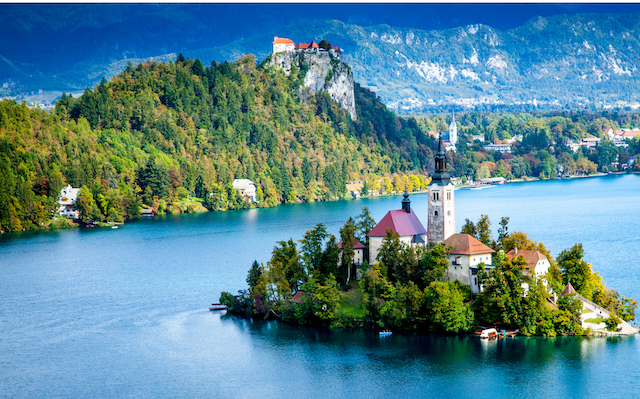
For example, walking or lying down or placing objects such as sun loungers or towels on public green areas along one of Slovenia’s lakes may translate into a 200 EUR fine.[2]Romans take this a step further: a comparable fine may be imposed for sitting – including while consuming food and/or beverages – on certain culturally significant public areas.[3] So sitting down to eat a gelato at the Spanish Steps in Rome is out of the question.
Portofino, meanwhile, has enacted the so-called “red zones” where it is forbidden for pedestrians to linger during the day. These include some of the town’s most picturesque locations overlooking the colourful buildings that stack straight above the sea. The reason being to make space for passengers from cruise ships. One local news portal jokingly labelled the measure “a ban on taking selfies”[4] – a selfie that may cost up to 332 EUR.[5]
Albufeira has apparently taken fashion police rather seriously. Its municipal Code of conduct strictly prohibits “any act or behaviour which, by its nature or effects, jeopardises the legally protected rights and interests of third parties or the safety of persons and property”, including “remaining or moving about in a state of partial nudity, which, for the purposes of this Code, shall mean a person partially exposing their body and even whilst wearing any item of clothing or accessory, without exposing their sexual organs” in public places. Put into layman’s terms: wearing bikinis or swimsuits in town is punishable by a fine that ranges from 300 EUR to 1,500 EUR.[6]
What can we take from all this?
The aforementioned rules point to two broader issues: one of a social nature and the other of a legal one.
Taken in isolation, such actions, apparently perceived as “antisocial behaviour” truly do not seem to be the most pressing issues in contemporary society. Some of the presented punishments may appear bizarre and, if words are not spared, occasionally outright ridiculous – especially when compared with sanctions imposed for life-threatening conduct such as driving under the influence.
Yet the aforementioned rules point to two broader issues: one of a social nature and the other of a legal one.
Regarding the first, it cannot be denied that modern mass tourism, by concentrating an enormous influx of people over relatively short periods, presents a significant nuisance to the local populace, particularly in smaller communities whose infrastructure was not designed to accommodate such numbers. The result is overcrowding and severe hindrances to residents in their daily outs and abouts.
Tackling this problem legally by imposing sanctions raises several issues of its own. First, it contributes to over-regulation, which is becoming a general defining legal characteristic of our times – prescribing where to sit, where to posit a towel, where not to eat, as well as delving into matters that should arguably be better addressed in the moral and not the legal sphere.
Furthermore, some of these rules impose heavy fines for actions that cannot be considered mala in se and would therefore hardly be recognised as unlawful through common sense alone. These rules are also highly particular – they are not state law but are enacted by individual towns and municipalities and may therefore significantly differ when passing from one town to another in just a few dozen kilometres. So much for legal certainty. Besides health insurance and road regulations, such rules are becoming something the tourist-of-today should also be mindful of.
Most importantly, the punitive response is problematic in its very conception. The social harms of mass tourism that the regulation aims to prevent arise only when the conduct occurs collectively on a significant scale. The law, however, necessarily operates against the individual. This raises an important and uncomfortable question as to the proportionality of these fines, regardless of whether the conduct is legally classified as a minor offence rather than a criminal offence. Can imposing such penalties on a lone, unsuspecting individual, acting in isolation without causing any disturbance, in the name of ensuring “local homeland security” still be considered legitimate?
Footnotes
[1] Drápal, J. and Pina Sánchez, J. (2019) Does the weather influence sentencing? Empirical evidence from Czech data. International Journal of Law, Crime and Justice, 56.: pp 16-17.
[2] Article 6/II-1 and article 31/I Odlok o javnem redu, Občina Bled.
[3] Article 4-1 Regolamento di polizia urbana, Giunta Capitolina n. 132/2019, Tabella delle sanzioni in misura ridotta, Roma.
[4] https://www.ilmugugnogenovese.it/divieto-di-stazionamento-selfie-a-portofino/
[5] Ordinanza n° 17, Comune di Portofino; Article 7-14., Nuovo codice della strada.
[6] Articles 5 and 11(b) Código de Comportamentos do Município de Albufeira, Diário da República n.º 118/2025, Série II de 2025-06-23.
[7] https://www.regione.sardegna.it/notizie/le-4-semplici-regole-per-tutelare-le-spiagge

written by Marko Balažic
